
Were Westcott and Hort Spiritists, Anti-Trinitarians, and Enemies of the Bible?
Slawomir Gromadzki
Introduction
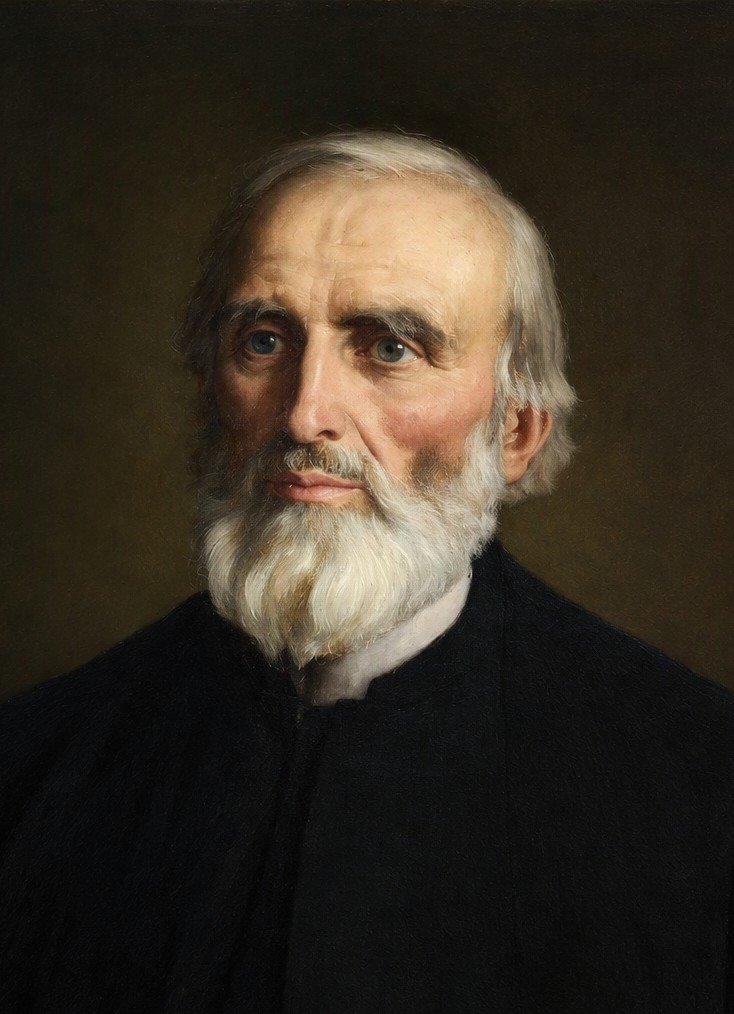
Fenton John Anthony Hort (1828–1892)
Brooke Foss Westcott (1825–1901) and Fenton John Anthony Hort (1828–1892) were Anglican biblical scholars whose Greek New Testament, published in 1881, significantly influenced modern Bible translations.
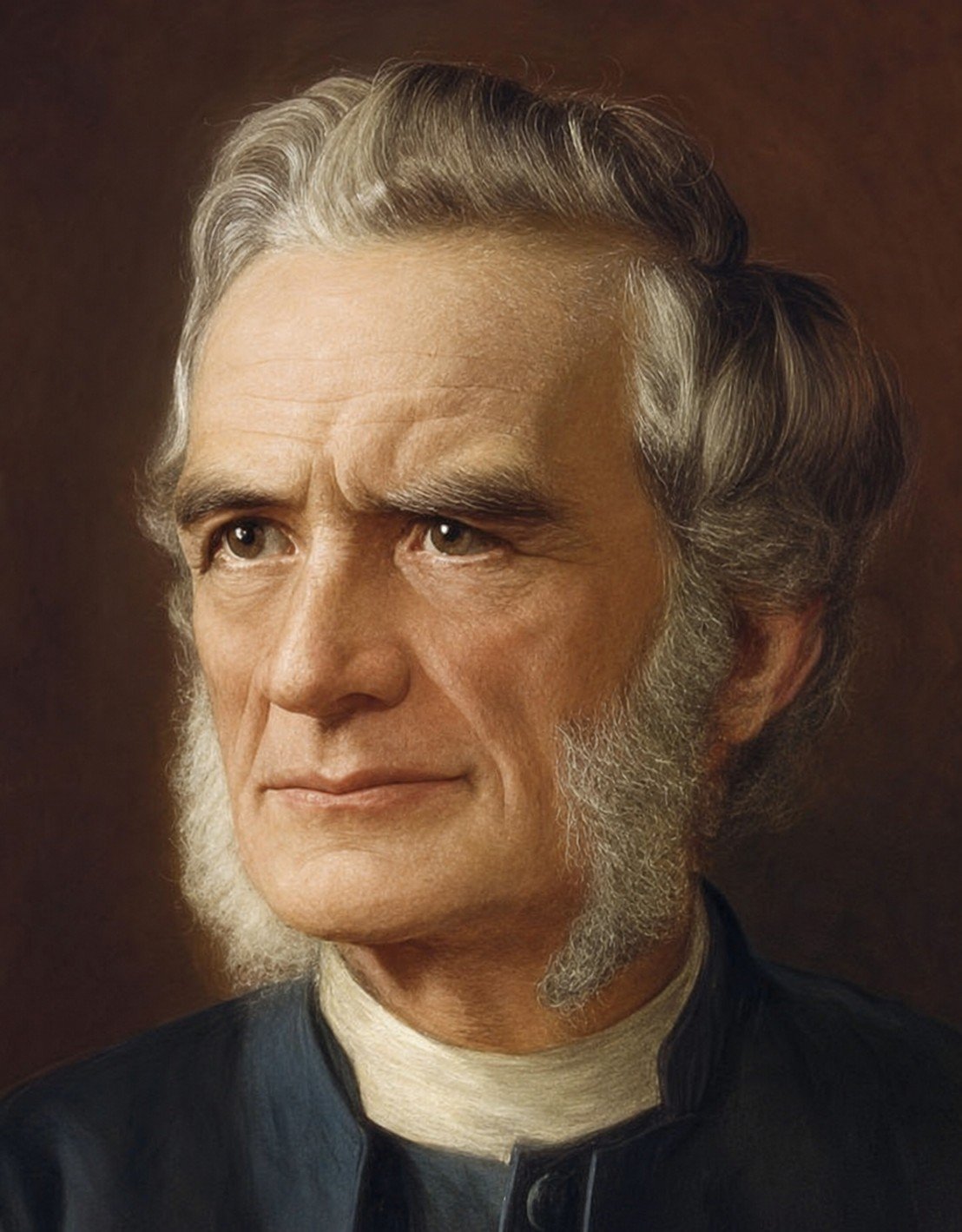
Brooke Foss Westcott (1825–1901)
For many years, some defenders of the King James Version, including Walter Veith, Kent Hovind, Benjamin Wilkinson, D. A. Waite, Gail Riplinger, and Floyd Nolan Jones, have questioned their Christian beliefs and accused them of spiritualism, denying Christ’s divinity, and undermining the inspiration of Scripture.
But are these accusations supported by historical evidence? The most reliable way to answer is to examine Westcott and Hort’s own writings rather than depend on selected quotations circulated by their critics.
1. The Accusation That Westcott and Hort Were Spiritists
One of the most frequently repeated accusations concerns their involvement in the Ghostly Guild, a Cambridge society established in the 1850s to investigate reports of supernatural phenomena.
Their involvement is a historical fact. Hort also described an unsuccessful experiment with table-turning, a practice associated with nineteenth-century spiritualism.
However, investigating supernatural claims does not necessarily mean accepting spiritualism as a religion or advocating communication with the dead.
More importantly, Westcott’s son explained why his father eventually abandoned these investigations:
“seriously convinced that such investigations led to no good.” (Arthur Westcott, Life and Letters of Brooke Foss Westcott, vol. 1, p. 119.)
This is important because some critics have quoted the biography selectively to suggest that Westcott maintained a lifelong commitment to spiritualism, while overlooking his eventual rejection of these investigations.
Westcott’s own words provide even stronger evidence.
When W. T. Stead, an advocate of spiritualism, approached Westcott about his publication Borderland, Westcott replied:
“Holy Scripture is our supreme guide.” (B. F. Westcott, letter to W. T. Stead, published in Borderland, 1893.)
Regarding attempts to communicate with spirits through mediums, Westcott described the practice as:
“unlawful and perilous.” (B. F. Westcott, letter to W. T. Stead, Borderland, 1893.)
Even Stead, who supported spiritualistic investigations, acknowledged the firmness of Westcott’s position, saying that his letter:
“gives no uncertain sound.” (W. T. Stead, response to Westcott’s letter, Borderland, 1893.)
These statements are difficult to reconcile with the accusation that Westcott promoted spiritualism. Although he investigated paranormal claims in his younger years, his mature position was that Christians should not seek communication with spirits.
There is also no convincing evidence that either Westcott or Hort used supposed messages from spirits to determine the wording of the Greek New Testament.
2. The Accusation That They Denied the Divinity of Christ
D. A. Waite and other KJV-only defenders have accused Westcott and Hort of denying or questioning the deity of Jesus Christ.
Yet Westcott explicitly declared:
“He who lived our life, on whom we place our trust, is the only Son of God, and therefore Himself in essence very God.” (B. F. Westcott, The Historic Faith: Short Lectures on the Apostles’ Creed.)
In his commentary on the Gospel of John, Westcott also affirmed:
“He never ceased to be God.” (B. F. Westcott, The Gospel According to St. John, commentary on John 1:14.)
These are unmistakable affirmations of Christ’s divine nature.
Both Westcott and Hort were Anglican clergymen who publicly affirmed the historic creeds of Christianity, including the Nicene Creed, which declares Christ to be:
“Very God of very God, begotten, not made, being of one substance with the Father.” (Nicene Creed, traditional Anglican text.)
Their public commitment to this creed, together with Westcott’s explicit writings, strongly contradicts the accusation that they rejected Christ’s deity or were anti-Trinitarian.
3. The Accusation That They Denied Christ’s Bodily Resurrection
Some critics, particularly D. A. Waite, have accused Westcott and Hort of denying the literal bodily resurrection of Jesus.
However, Westcott wrote two substantial works defending the resurrection: The Gospel of the Resurrection and The Revelation of the Risen Lord.
In the former, he declared that Christians must place the resurrection:
“in the very front of our confession” (B. F. Westcott, The Gospel of the Resurrection.)
He considered belief in Christ’s resurrection so essential that rejecting it would mean abandoning the Christian name.
Hort likewise affirmed in an Easter sermon:
“Jesus Christ who was crucified on Calvary rose from the dead on the third day.” (F. J. A. Hort, Easter sermon, reproduced in his collected writings.)
Both men also affirmed Article IV of the Anglican Thirty-Nine Articles, which states:
“Christ did truly rise again from death, and took again his body, with flesh, bones” (Thirty-Nine Articles of Religion, Article IV.)
These statements directly contradict the accusation that they denied Christ’s bodily resurrection.
4. The Accusation That They Rejected the Inspiration of Scripture
Floyd Nolan Jones and other critics have alleged that Westcott and Hort did not believe the Bible was divinely inspired.
Westcott, however, wrote:
“The Bible is indeed the Word of God in the fullest spiritual sense.” (B. F. Westcott, Introduction to the Study of the Gospels.)
He also described the Gospels as displaying:
“absolute truth” (B. F. Westcott, Introduction to the Study of the Gospels.)
Hort similarly declared:
“I have, I trust, a firm and assured belief in the reality of Revelation, the authority of Scripture” (F. J. A. Hort, Life and Letters of Fenton John Anthony Hort.)
These statements demonstrate that both men affirmed divine revelation and biblical authority, even though their understanding of inspiration and textual criticism did not necessarily agree with every position held by modern fundamentalists.
5. How Selective Quotations Have Misrepresented Hort
David Sorenson and other KJV-only writers have used a statement by Hort to suggest that he regarded evangelical Christians as perverted and rejected biblical authority.
However, Hort’s actual words were:
“The positive doctrines even of the Evangelicals seem to me perverted rather than untrue.” (F. J. A. Hort, letter to Rowland Williams, Life and Letters of Fenton John Anthony Hort.)
Hort was criticizing how certain evangelical doctrines were expressed or applied, not describing evangelical Christians themselves as morally perverted.
Furthermore, his subsequent remarks about disagreements over biblical authority concerned the liberal scholars associated with Essays and Reviews, not evangelicals generally.
The full context therefore gives a substantially different meaning from the impression created by the shortened quotation.
6. Even Defenders of the Traditional Greek Text Have Rejected These Accusations
Theodore P. Letis, who defended the traditional ecclesiastical Greek text rather than the Westcott–Hort approach, nevertheless criticized the accusations made against these scholars.
He wrote that Westcott and Hort:
“never advocated theosophy or spiritualism or German rationalism as alternative religion.” (Theodore P. Letis, review of Gail Riplinger’s New Age Bible Versions, discussed in The Ecclesiastical Text.)
This testimony is especially valuable because it comes from a scholar who did not share their preferred textual approach.
The issue is not whether Westcott and Hort were correct in every theological or textual decision, but whether accusations against them are historically justified.
7. An Adventist Scholar Challenges the Accusations
Seventh-day Adventist biblical scholar Johannes Kovar addressed the controversy in his article The Textus Receptus and Modern Bible Translations, published by the Adventist Biblical Research Institute.
Referring to accusations that Westcott and Hort were spiritualists, Kovar concluded:
“the allegation that they were spiritualists could not be proven by historical examination” (Johannes Kovar, The Textus Receptus and Modern Bible Translations, section III, point 9, Biblical Research Institute.)
Kovar also warns against conspiracy theories and emphasizes the importance of examining manuscript evidence rather than judging biblical texts by allegations about the scholars who studied them.
His argument is particularly relevant because it provides an Adventist scholarly response to claims promoted within Adventist circles.
8. Westcott’s Remarkable Understanding of Humanity’s Inclusion in Christ
There is another important reason why I find the accusations against Westcott unconvincing.
In The Gospel of the Resurrection, Westcott expressed a remarkable understanding of humanity’s corporate relationship with Christ:
“He was not one man only among many men, but in Him all humanity was gathered up.” (B. F. Westcott, The Gospel of the Resurrection, chapter 2, p. 39, quoted by Jack Sequeira in Christ Our Redeemer, lesson 5.)
He continued:
“His death is our death, His resurrection our resurrection.” (B. F. Westcott, The Gospel of the Resurrection, chapter 2, p. 39, quoted by Jack Sequeira in Christ Our Redeemer, lesson 5.)
This is remarkably close to the biblical truth emphasised by Prof. W.W. Prescott and Pastor Jack Sequeira: that Christ, as the second Adam, represented the entire human race in His life, death, and resurrection.
The principle is expressed in Scripture:
“If One died for all, then all died.” (2 Corinthians 5:14, NKJV.)
Westcott understood that Christ’s redemptive work involved humanity corporately, not merely Jesus as an isolated individual.
9. Westcott Also Recognised That the Heavenly Sanctuary Requires Cleansing
Perhaps even more remarkable is Westcott’s commentary on Hebrews 9:23, which states:
“Therefore it was necessary that the copies of the things in the heavens should be purified with these, but the heavenly things themselves with better sacrifices than these.” (Hebrews 9:23, NKJV.)
Many Christian commentators interpret this passage primarily in terms of the inauguration or dedication of the heavenly sanctuary. Westcott, however, recognised that the language requires an actual cleansing.
He wrote:
“The whole structure of the sentence requires that ‘cleansed’ should be supplied in the second clause from the first” (B. F. Westcott, The Epistle to the Hebrews: The Greek Text with Notes and Essays, p. 271.)
He went even further:
“even ‘heavenly things,’ so far as they embody the conditions of man’s future life, contracted by the Fall something which required cleansing” (B. F. Westcott, The Epistle to the Hebrews, pp. 271–272.)
This is an extraordinary admission from a non-Adventist theologian! Westcott recognised that the heavenly things (heavenly sanctuary) themselves required cleansing!
Conclusion: Why Does Walter Veith Continue to Promote These Accusations?
After examining the historical evidence, I find it particularly strange and disappointing that Professor Walter Veith, a respected Seventh-day Adventist evangelist, has promoted accusations portraying Westcott and Hort as spiritists and enemies of biblical truth without presenting convincing evidence for such sweeping conclusions.
Although their early involvement in investigating supernatural phenomena is documented, this does not establish that they became committed spiritists. On the contrary, Westcott explicitly condemned attempts to communicate with spirits through mediums as “unlawful and perilous” (B. F. Westcott, letter to W. T. Stead, Borderland, 1893).
Likewise, the accusation that they were anti-Trinitarians is difficult to reconcile with Westcott’s explicit affirmation that Christ is “Himself in essence very God” (B. F. Westcott, The Historic Faith: Short Lectures on the Apostles’ Creed).
What concerns me most is that some of these accusations have been repeated through quotations taken out of context or interpretations supplied by earlier critics, while clear statements from Westcott and Hort themselves are overlooked.
Even Seventh-day Adventist biblical scholar Johannes Kovar has challenged these accusations, explaining that the allegation of spiritualism could not be established through historical investigation (Johannes Kovar, The Textus Receptus and Modern Bible Translations, Biblical Research Institute).
I find this especially surprising because Westcott expressed remarkable biblical insights into humanity’s inclusion in Christ and the cleansing of the heavenly sanctuary—truths of particular importance to Seventh-day Adventists.
Surely, as Christians, and especially as Seventh-day Adventists who claim to value biblical truth, we have a responsibility to examine the evidence carefully before repeating serious accusations against others.
Professor Veith may sincerely believe that he is defending the Bible. Nevertheless, sincerity cannot substitute for historical evidence, and disagreement with Westcott and Hort’s textual conclusions does not justify portraying them as spiritists or anti-Trinitarians without convincing proof.
We should remember the biblical instruction:
“You shall not circulate a false report.” (Exodus 23:1)