
Why Christ Had to Be God to Be Able to Legally Save Entire Humankind
Slawomir Gromadzki
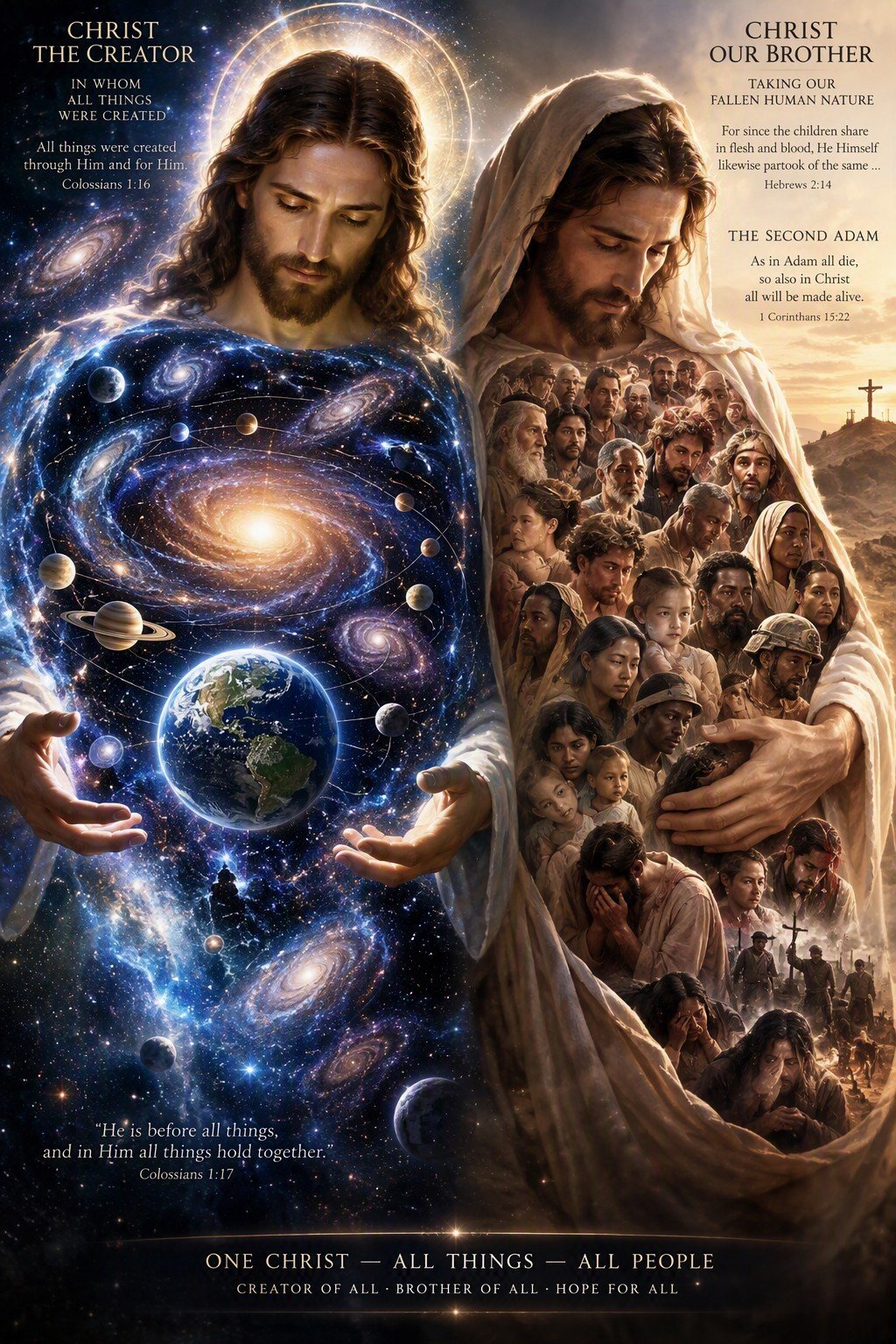
The Divinity of Christ
Before considering why Christ had to be God to save us, we must establish what Scripture says about His identity. Jesus is the eternal divine Son who became truly human without ceasing to be God.
John declares that “the Word was with God, and the Word was God,” and that “the Word became flesh and dwelt among us.” John 1:1, 14, NKJV.
Paul identifies Christ as the One in whom creation originated and continues to exist: “For in him all things were created… He is before all things, and in him all things hold together.” Colossians 1:16–17, NIV.
Paul also affirms the fullness of Christ’s divinity: “For in Him dwells all the fullness of the Godhead bodily.” Colossians 2:9, NKJV.
Ellen White expresses this truth in three particularly clear statements:
“In Christ is life, original, unborrowed, underived.” Ellen G. White, The Desire of Ages, p. 530.
“The Lord Jesus Christ, the divine Son of God, existed from eternity, a distinct person, yet one with the Father.” Ellen G. White, The Review and Herald, 5 April 1906.
“Christ is the pre-existent, self-existent Son of God.” Ellen G. White, The Signs of the Times, 29 August 1900.
These statements establish the foundation of our discussion: the One who came to save humanity is Himself our eternal God and Creator. Why is His divine identity essential to our salvation?
The Humanity of Christ
To save fallen humanity according to the demands of God’s law, Christ had to become genuinely human. He could not legally represent us by taking Adam’s sinless nature before the Fall. He had to enter the fallen human condition of the people He came to redeem.
The Bible is unmistakably clear:
“Since the children have flesh and blood, he too shared in their humanity” (Hebrews 2:14, NIV).
“For this reason he had to be made like his brothers and sisters in every way” (Hebrews 2:17, NIV).
Paul also says that God sent “his own Son in the likeness of sinful flesh” and that He “condemned sin in the flesh” (Romans 8:3, NKJV).
Christ did not condemn sin outside humanity, but “in the flesh”. He entered the very human nature in which sin had gained its power. Paul describes this power as “the law of sin which is in my members” (Romans 7:23, NKJV). Yet he declares that “the law of the Spirit of life in Christ Jesus has made me free from the law of sin and death” (Romans 8:2, NKJV).
This does not mean that Christ Himself became sinful in character. It means that He took our fallen human nature and, through the power of the Holy Spirit, condemned and overcame the representative law of sin of humanity within that fallen nature (flesh).
“For we do not have a High Priest who cannot sympathise with our weaknesses, but was in all points tempted as we are, yet without sin” (Hebrews 4:15, NKJV).
Christ was tempted as we are because He shared our human weaknesses. Nevertheless, He never committed sin, never consented to evil and never possessed a corrupt character.
The same truth appears in other passages:
“God made him who had no sin to be sin for us, so that in him we might become the righteousness of God” (2 Corinthians 5:21, NIV).
Christ did not merely carry our sins externally. He entered our human situation, took our fallen nature and bore our condemnation and death as our Representative.
Ellen White expressed this truth in some of her strongest statements:
“He took upon His sinless nature our sinful nature, that He might know how to succour those that are tempted.” (Review and Herald, 15 December 1896)
“Taking upon Himself man’s nature in its fallen condition, Christ did not in the least participate in its sin (He never sinned in our sinful nature).” (Ellen G. White Comments, Seventh-day Adventist Bible Commentary, vol. 7, p. 912, on Hebrews 4:15)
“He took upon Himself fallen, suffering human nature, degraded and defiled by sin.” (Youth’s Instructor, 20 December 1900)
“Like every child of Adam He accepted the results of the working of the great law of heredity.”
“For four thousand years the race had been decreasing in physical strength, in mental power, and in moral worth; and Christ took upon Him the infirmities of degenerate humanity.” (The Desire of Ages, p. 49)
The strongest evidence that Christ entered the full reality of fallen humanity is found in Ellen White’s statement:
“He was subject to all the evil propensities to which man is heir, working in every conceivable manner to destroy His faith.” (Letter 303, 1903)
Yet Christ never yielded to those temptations. Ellen White wrote:
“Not even by a thought did He yield to temptation.” (The Desire of Ages, p. 123)
Christ therefore was tempted internally through the law of sin and through three basic drives of the flesh (the last of the eyes, the last of the flesh, and the pride of life). He experienced the pressure of temptation without allowing temptation to become sin. He overcame—not by avoiding our condition, but by living in complete dependence upon His Father through the Holy Spirit.
This is why Christ could legally become the second Adam and the Representative of the entire human race. In His human nature, humanity met the law of God, rendered perfect obedience and bore the penalty of sin. The victory and death of Christ were therefore not unrelated events performed by someone outside our human family. They were the obedience and death of humanity represented in Him.
Christ was our Brother in the flesh, yet He was also the eternal Son of God. He took our nature without taking our personal guilt; He bore our sin without becoming a sinner; and He entered our condemnation in order to condemn sin in the flesh and fulfil the righteous requirement of the law for us.
The Challenge of Saving Fallen Humanity
To save us, God had to address a profound ethical difficulty arising from the demands of His own holy, eternal and unchanging law — law He could neither alter nor bypass to rescue us.
Since the creation of humanity approximately 6,000 years ago, about 100 billion people have lived on planet Earth.
How could one person save not merely one sinner, but the entire human family? How could the salvation of 100 billion sinners be accomplished through one Man while fully satisfying the demands of God’s holy law?
Humanly speaking, this was impossible.
The two demands of God’s law
Why? Because, for us to live forever, two demands of the law must be met—demands we cannot fulfil ourselves.
First, the law requires clean hands and a pure heart: perfect holiness and obedience, both in our nature and in our conduct.
“Who may ascend into the hill of the LORD? Or who may stand in His holy place? He who has clean hands and a pure heart…” Psalm 24:3–4, NKJV.
Second, because we are born with unclean hearts—with natural selfishness—and repeatedly make our hands unclean through sinful actions, the law demands our death.
Can we meet these demands and still live? No! By ourselves, it is impossible.
Furthermore, like any just law, God’s law does not allow a righteous, innocent person simply to be put to death in place of someone guilty and condemned.
The Lamb Who Could Open the Scroll
No wonder John’s initial experience in Revelation 5 presents such a distressing picture. John “wept much” because no one in heaven, on earth or under the earth was found worthy to open the scroll (the book of eternal life of humankind). This expresses the apparent impossibility of saving fallen humanity—as though even God’s angels could see no way to save us.
But then one of the elders told John not to weep: the Lion of the tribe of Judah had prevailed. When John looked, he saw a Lamb standing as though it had been slain. The Lamb was worthy to open the scroll because He had been slain and had redeemed people to God by His blood. Revelation 5:2–9.
All Created In Him
Why did the Lamb need to be both fully human—as a descendant of Judah—and fully divine to save the whole human race legally?
First, God qualified Christ to become the second Adam—the head of a second humanity. He would represent not merely one sinner, but the entire human family: all 100 billion sinners, past, present and future.
Only Christ, as God and Creator, could represent everyone and include everyone in Himself. The foundation of this understanding is the biblical declaration that everything—including all of us—was created in Him. The original wording is not merely “through Him,” as some translations suggest, but “in Him.”
“For by (Gr. “en” = “in“) Him all things were created that are in heaven and that are on earth… All things were created through Him and for Him. And He is before all things, and in (Gr. “en”) Him all things consist.” Colossians 1:16–17, NKJV.
In the opening phrase, the Greek word translated “by” is en—“in.” This distinction is central to the argument: everything was created in Christ, as well as through Him and for Him.
Since all of us were created in Him as our God and Creator, He could represent us all. The entire human family—all 100 billion sinners—could be included and represented in Him.
Our Creator Became Our Brother In the Flesh
Furthermore, to save us according to the demands of the law, Christ identified Himself with our sinful condition and entered our situation. He became our brother in the flesh, taking the same human nature that we now possess.
Thus, all of us (sinners) could be represented by Christ and included in Him on these two grounds: we were created in Him, and He took our fallen humanity upon Himself.
As our Creator and our brother, He could become our legal representative. In Him, the whole fallen human family could stand represented before God.
His obedience and death as our representative
God could therefore save us legally and fulfil the righteous demands of His law concerning us. Christ did not merely live a perfect life and die instead of us as someone separate from us. He obeyed and died as our representative—as us. All 100 billion sinners were included in Him, the second Adam, the head of a second humanity.
God’s own love revealed in Christ
There is another vital reason why Christ had to be fully divine. If Jesus did not possess the fullness of the divine nature, He could not fully represent God. Nor could His suffering and death be the suffering and death of God Himself for us in Christ.
If the One who suffered and died for us were merely a created being, the universe could still harbour doubts about God’s love for those He had created. But because Christ is truly God, His sacrifice reveals God’s own self-giving love, because through Christ’s divine nature “God was in Christ reconciling the world to Himself“.
Christ therefore represents both sides: as our Creator and brother, He represents humanity before God; as the fully divine Son, He represents God before humanity and the universe.
That is why only Christ, as God and Creator—in whom we were all created, and who became our brother in the flesh—could legally save us all in One.