
Mysterious Altar to the Unknown God in Athens
Slawomir Gromadzki
Paul Among the Philosophers of Athens
Around AD 50, the apostle Paul arrived in Athens, one of the greatest centres of philosophy, education and culture in the ancient world. Athens was famous for its philosophers, especially the followers of Plato, Aristotle, Epicurus and Zeno. Its people loved discussing new ideas, debating profound questions and searching for wisdom.
But Athens was also a city filled with idols. Magnificent temples, statues and altars honoured numerous Greek gods. As Paul walked through the city, he was deeply troubled by the idolatry he witnessed. He began preaching about the true God, Jesus Christ and His resurrection.
His message attracted the attention of two influential philosophical groups, the Epicureans and the Stoics. Curious about his unusual teaching, they brought him to the Areopagus, also known as Mars Hill, where important philosophical and religious matters were discussed (Acts 17:16–21).
Standing before these educated philosophers, Paul faced a remarkable challenge. How could he introduce the true God to people who believed they already possessed great wisdom and worshipped so many gods?
Instead of immediately condemning their idolatry, Paul began with something unusual he had discovered while walking through their city.
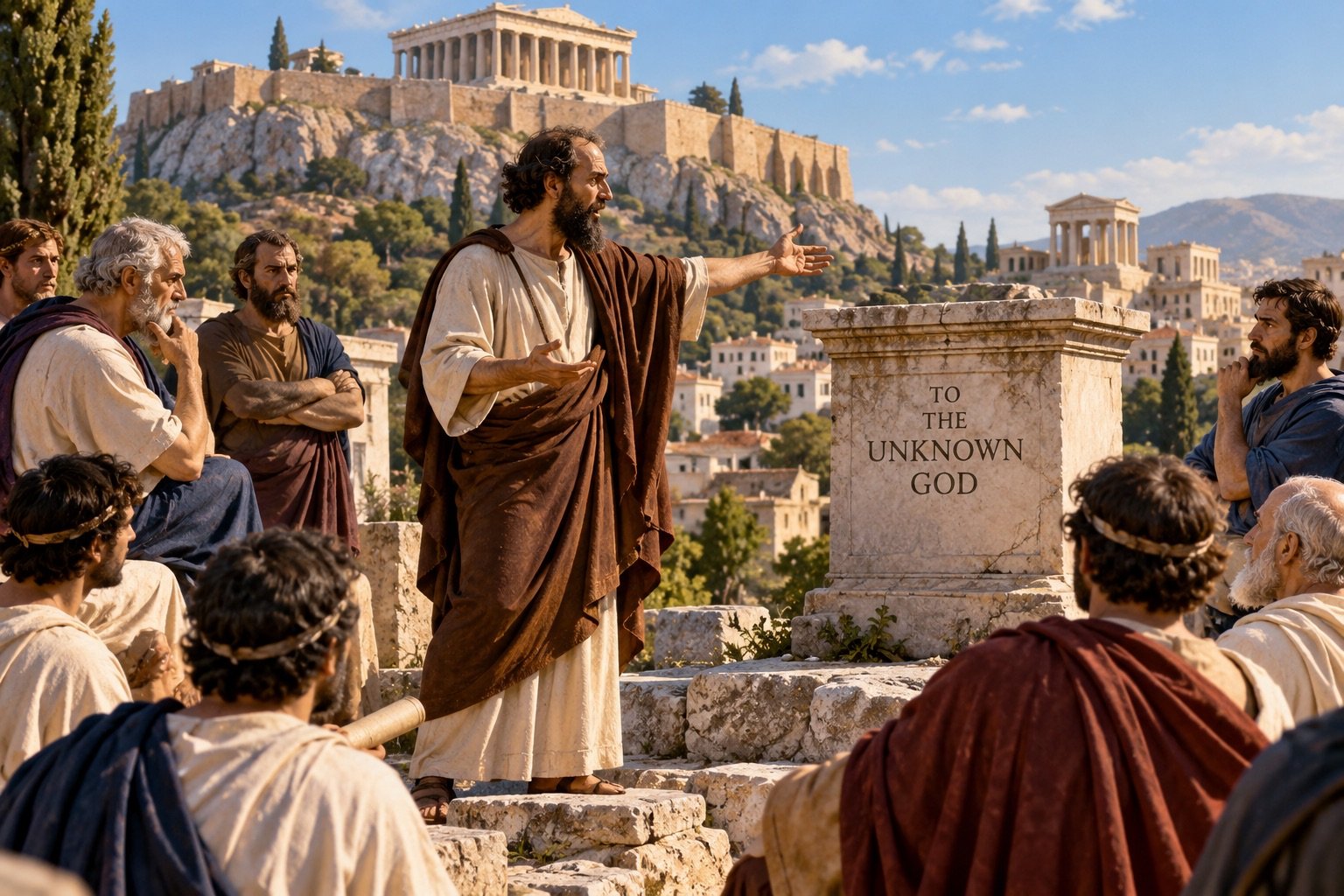
The Mysterious Altar to the Unknown God
“For as I passed by, and beheld your devotions, I found an altar with this inscription, TO THE UNKNOWN GOD. Whom therefore ye ignorantly worship, him declare I unto you.” (Acts 17:23, KJV)
Why would the Athenians build an altar dedicated to a God whose name they did not even know?
Behind this mysterious inscription lies a fascinating ancient tradition that may help explain the origin of such altars.
A Terrible Plague and a Mysterious Deliverance
About 600 years before Christ, according to an ancient Greek tradition, a terrible plague struck Athens. People were dying, fear spread throughout the city, and the inhabitants desperately searched for deliverance.
They worshipped many gods, but none of their religious efforts seemed to bring relief. What if they had somehow offended a deity whose identity they did not know?
According to the ancient historian Diogenes Laertius, the Athenians consulted Epimenides from the island of Crete, who proposed an extraordinary solution.
He gathered sheep in Athens and released them to wander freely through the city. Wherever a sheep layd down, the people were instructed to offer a sacrifice to the unknown god.
And as a result, according to the ancient account, when they did that, the plague stopped!
The Athenians preserved those altars without the names of gods as reminders of their mysterious deliverance.
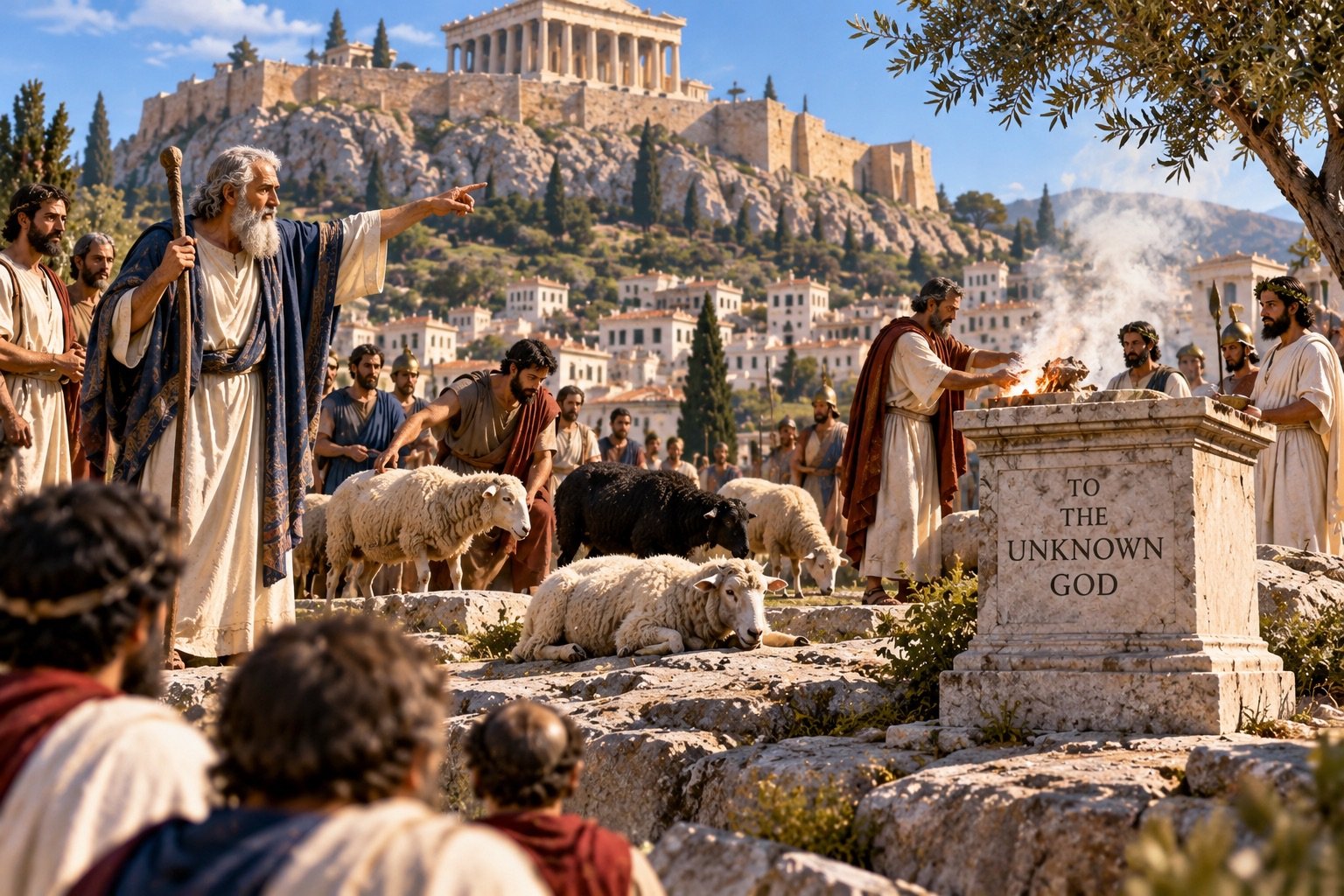
Paul Reveals the Unknown God
Now, some six centuries later, Paul stood before the philosophers of Athens who knew the story behind the altars to the unknown god. And when among their countless temples and altars, he had discovered one bearing the mysterious inscription: “TO THE UNKNOWN GOD” he was inspired by Holy Spirit to refer to those altars to presetnt to the Athenians the true God.
Paul could have begun by attacking their idols and false beliefs. Instead, he used their own religious inscription to introduce them to the living God.
His message was essentially this: You have built an altar to a God you do not know who long ago saved your ancestors when countless other gods did nothing. I have come to tell you His name and who He is!
The Athenians acknowledged that there might be a divine reality beyond their knowledge. Paul proclaimed the Creator of heaven and earth, the One who gives life and breath to every human being.
Ellen White Explains Paul’s Remarkable Approach
The book Acts of the Apostles beautifully describes the spiritual condition of the Athenians:
“With all their intelligence and general knowledge, they were ignorant of the God who created the universe. Paul drew the minds of his idolatrous hearers beyond the limits of their false religion to a true view of the Deity, whom they had styled the ‘Unknown God. Yet there were some who were longing for greater light. They were reaching out toward the Infinite.” (Acts of the Apostles, p. 237)
These people possessed extraordinary knowledge of philosophy, literature and human wisdom, yet they lacked the most important knowledge of all — the knowledge of the true God.
Instead of beginning with condemnation, Paul found a point of contact with his listeners. He understood their culture, their philosophy and their religious beliefs, and used that knowledge to lead them toward the truth.
The Girl Who Knew God but Did Not Know His Name
Many centuries after Paul preached about the Unknown God in Athens, something remarkable happened in the life of a young American girl named Helen Keller.
When Helen was only nineteen months old, a serious illness left her both blind and deaf. She grew up surrounded by darkness and silence, unable to see the faces of those who loved her or hear their voices.
Imagine living in a world where you have never seen the sunshine, never heard a bird singing, and never heard your mother call your name!
But everything began to change when a devoted teacher named Anne Sullivan entered her life. With extraordinary patience and love, Anne taught Helen to communicate by spelling words into her hand.
One day, the famous Christian preacher Phillips Brooks spoke to Helen about God. Through her teacher’s fingers, he explained the wonderful truth about the heavenly Father and His love.
Helen listened with great attention. Then something extraordinary happened. According to an early account of their meeting, Helen responded:
“I knew all that before, but I didn’t know His name.” (Phillips Brooks, as recounted in Heaven, Home and Happiness, 1901, p. 216.)

What a remarkable statement from a young girl who could neither see nor hear! Although she had not previously understood God as He was now being explained to her, she had already developed some awareness of His existence.
But what did she mean?
Her devoted teacher, Anne Sullivan, later explained that although Helen could neither see nor hear, she had learned about the world through touch, experience and communication. As her understanding grew, she began wondering who had created the earth, the sun and everything around her. She had already concluded that there must be a power greater than human beings. In fact, she began asking herself what this mysterious power was called. And Helen herself, writing at the age of twelve, expressed her conviction that God had loved her even before she knew His name.
Imagine that! A little girl living in a world of silence and darkness had developed an awareness of God before she understood the Christian message about Him, before she knew His name, and before she knew about Him from His Word.
Do We Really Know God, or We Only Know About Him?
The Athenians had an altar to a God they did not know. Helen Keller sensed the existence of God before she knew His name.
Paul declared: “From one man he made all the nations, that they should inhabit the whole earth; and he marked out their appointed times in history and the boundaries of their lands. God did this so that they would seek him and perhaps reach out for him and find him, though he is not far from any one of us.” (Acts 17:26–27, NIV)
Paul was telling the Athenians that God had not abandoned humanity and left people to discover Him by accident. He created every human being, gave people life, and placed them in a world where they could discover evidence of His existence and seek a relationship with Him.
We may not see Him with our eyes or hear His voice with our ears, yet He can reach the human heart through His creation, His providence and His love.
But God has done something even more wonderful. He has revealed Himself through His Son, Jesus Christ, so that we may know not merely that He exists, but who He truly is and how much He loves us.
And that brings us to the most important question: We know His name, but do we really know Him?
We have the Bible. We know the name of Jesus. We have heard countless sermons about God’s love. We know about His wonderful sacrifice on Calvary.
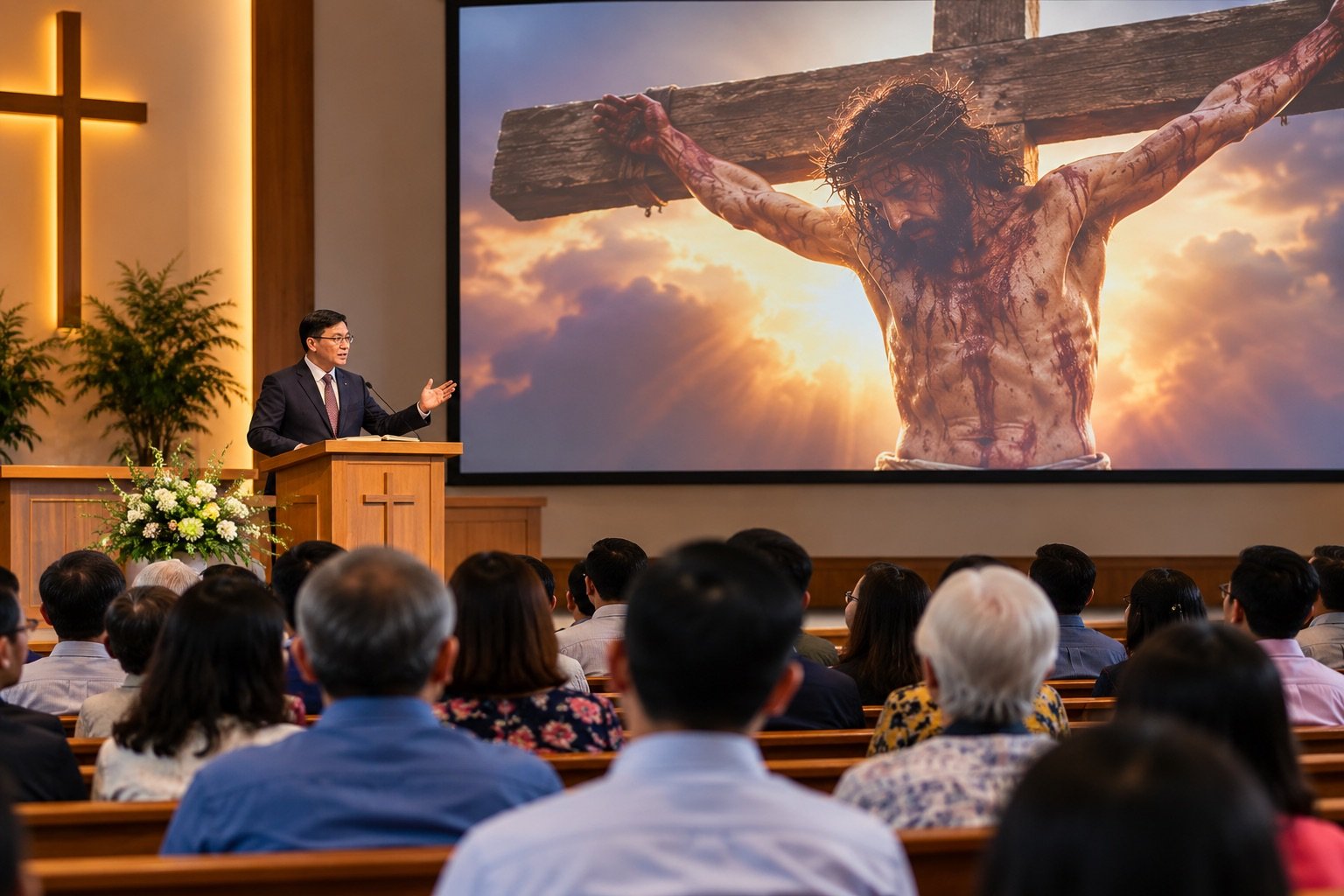
Yet is it possible that, despite all our religious knowledge, God remains a stranger to our hearts?
We may have excellent eyesight and yet fail to recognise His presence. We may hear thousands of sermons and yet never truly listen to His voice. We may know many Bible verses and doctrines and yet fail to experience His love personally.
Jesus Himself declared: “And this is life eternal, that they might know you the only true God, and Jesus Christ, whom you have sent.” (John 17:3)
The greatest discovery in life is not merely to know about God, but to know Him personally through Jesus Christ and through our daily communion with Him
May the God we worship never remain unknown to our hearts!